Corner Desk or Straight Desk: Four Ways to Match the Shape to Your Room
 Save
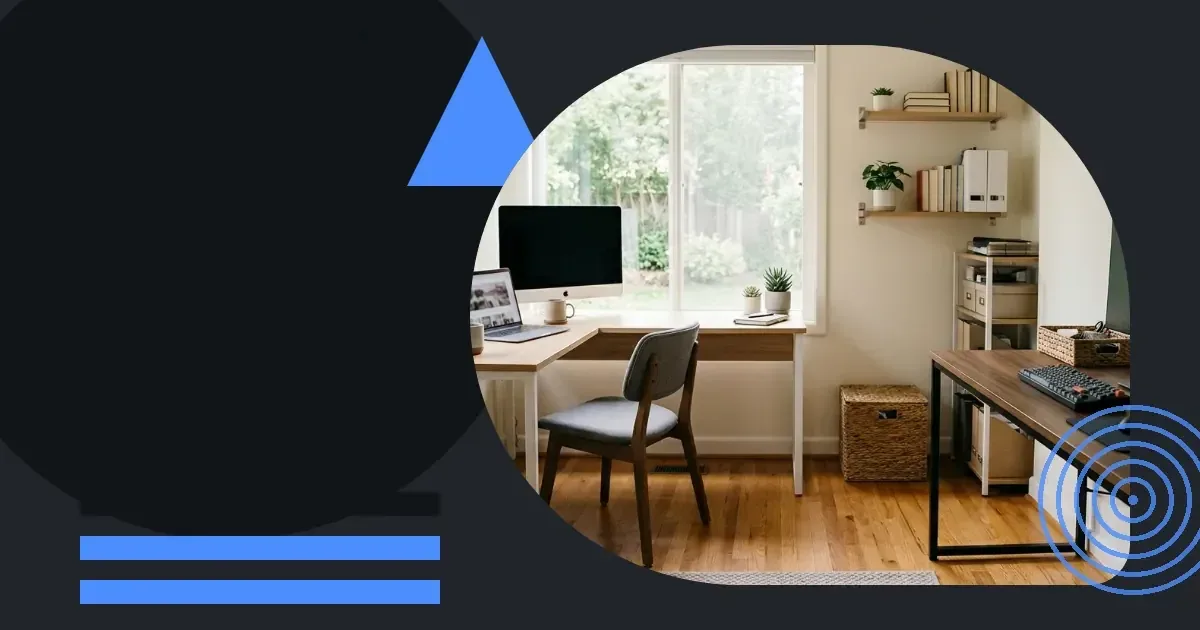
A corner desk or straight desk choice comes down to one question: which shape gives you more usable surface for the floor space you actually have? A corner desk fills an angle of the room and often provides more worktop for the same footprint against the walls, while a straight desk is easier to move, easier to pair with other furniture and suits rooms where the corner is already busy. Deskstor looks at how the two shapes behave in real rooms, not just on a showroom floor, so the rest of this piece works through where each one earns its place.
What separates a corner desk from a straight desk
A straight desk is a single flat run, usually against one wall, with a consistent depth from end to end. A corner desk is shaped to sit across an angle, typically an L-shape or a curved front, so it draws on two walls instead of one.
This means a corner desk converts a dead patch of floor, the awkward triangle between two walls, into worktop. A straight desk doesn't try to do that; it simply occupies a clean rectangle, which is why it's easier to picture fitting before you've measured anything.
Comparing usable surface area for your space
Surface area is the number that actually matters, not the desk's overall footprint. Two desks can occupy a similar amount of floor and still give you very different amounts of worktop to put things on.
| Factor | Corner desk | Straight desk |
|---|---|---|
| Worktop per metre of wall used | Higher, because it draws on two walls | Lower, limited to one wall run |
| Floor footprint | Larger overall, but uses an otherwise wasted corner | Smaller and more predictable |
| Walking space left in the room | Can feel tight if the room is narrow | Usually more open |
| Ease of moving later | Harder, often needs two people | Straightforward for one person |
If your room has a corner that currently holds nothing but a plant or a pile of boxes, that's the space a corner desk is built to use. If every wall in the room is already doing a job, a straight desk keeps the rest of the floor free.
Reading your room before you choose
Walk the room with a tape measure before you look at any desk. Note where the door swings, where a radiator sits, and where natural light falls, because a corner desk facing a blank wall feels very different from one facing a window.
Questions worth answering on the spot
- Which corner, if any, is genuinely unused right now?
- Does the door or a wardrobe cut across the space you're considering?
- Would a chair need to pull out into a walkway?
- Is there a plug socket close enough, or will cable management become a visible problem?
A desk for a small office rarely fails because the desk itself is wrong; it fails because nobody checked the swing of a door or the reach of a socket first.
Where a corner desk earns its place
A corner desk suits a room that has one genuinely spare corner and not much else to offer. It also suits anyone running dual monitors, since the angled surface gives you a wide curve to arrange two screens without craning your neck to the side.
It works well too if you want a permanent, settled setup rather than something you'll rearrange every few months. Once a corner desk is built into a space, it tends to stay there, which is fine if you're confident the room's layout won't change soon.
Where a straight desk earns its place
A straight desk suits a shared workspace, a room that doubles as a guest room, or anywhere you might want to shift the furniture around later. Its single flat run also pairs more easily with a pedestal desk unit or a separate filing cabinet pushed alongside it, since you're not fighting an angled edge.
If you're still deciding between a simple writing surface and something built for a monitor and peripherals, it's worth reading how a writing desk compares to a computer desk before settling on either shape.
Fitting either shape into a small office
In a genuinely small office, the corner desk's advantage can disappear if the room is narrow rather than square. A long, thin room often works better with a straight desk pushed against the short wall, leaving a clear path down the length of the room.
- Measure the two walls either side of the corner you're considering, not just one.
- Mark out the desk's full footprint on the floor with tape before buying anything.
- Check you can still open every door, drawer and window with the marked footprint in place.
- Walk the route from the door to the chair and note any pinch points.
- Decide whether the desk needs to move again in future, and weigh that against a corner desk's permanence.
- Confirm a socket or cable route reaches the spot without trailing across a walkway.
For more ideas on working within a tight room, the piece on fitting a desk into a small room covers placement options beyond just corner versus straight.
Living with the desk day to day
A corner desk rewards you with elbow room and a wide sweep for papers, a monitor arm or a second screen. A straight desk rewards you with flexibility: it's lighter to shift when you redecorate, easier to clean around, and simpler to extend with a second unit if your storage needs grow.
Think about how long you expect to stay in the room as it is. A short-term setup favours the straight desk's portability; a settled, long-term workspace is where the corner desk's extra surface pays off.
#Corner desk #Small office #Home office #Cable management
Download PDF: Corner desk or straight desk: room-fit checklist PDF, 28 KB
Further reading
Frequently asked questions
Is a corner desk always bigger than a straight desk?
Not necessarily in floor footprint, but it usually offers more worktop because it draws on two walls instead of one. The actual size depends on the model and the room.
How much space does a corner desk need to work well?
It needs a genuine corner with clear access on both sides, plus enough room for the chair to pull back without blocking a door or walkway. A cramped or narrow corner often suits a straight desk better.
What are the main benefits of a corner desk over a straight one?
A corner desk makes use of an otherwise wasted angle in the room and gives a wider surface for dual monitors or spreading out paperwork. The trade-off is that it's heavier to move and less flexible if your layout changes.
Which desk shape suits a small office if the room is narrow rather than square?
A straight desk against the short wall usually works better in a narrow room, since a corner desk can block the walking route. Measuring both walls before deciding avoids this problem.