Chair Damage to Wooden Floors – Four Protectors That Keep Surfaces Intact
 Save
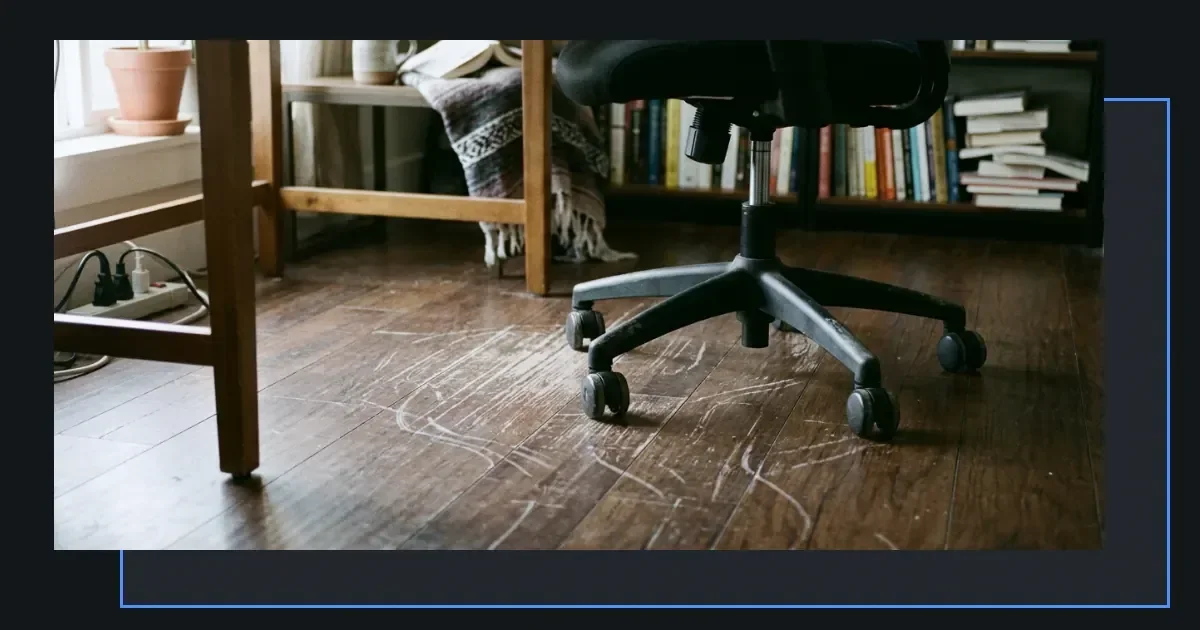
Office chairs scratch, dent and wear wooden floors through daily movement. The problem comes from the castors digging in as you shift position, and from the chair's weight pressing down through small contact points. You can protect the floor without restricting how the chair moves – Deskstor explains the four methods that work and where each one fits best.
Why Office Chairs Mark Wood
Wooden floors show damage from chairs because the finish layer is soft enough to take an impression. Castors concentrate the chair's weight and the person sitting on it into points smaller than a coin. Each time you push back or turn, those points press into the grain and leave tracks.
Harder woods such as oak resist longer than softer species like pine. A sealed floor holds up better than an oiled one because the seal adds a protective layer. Still, repeated movement wears through both in time.
Chair Mats for High-Movement Areas
A chair mat spreads the load across a larger surface and lets the chair roll freely. Polycarbonate mats are thin, transparent and hard enough not to crack under a person's weight. PVC mats cost less but may yellow or bow over time.
Place the mat so the chair stays on it during normal use – measure how far back you push before buying. Mats with a lip that tucks under the desk prevent the chair rolling off the edge. Clean the underside before laying it down; grit trapped beneath the mat will scratch the floor as the mat shifts.
Good for: shared offices, rooms where you move between desk and filing cabinet, spaces where appearance matters less than function.
Felt Pads on Chair Feet
Self-adhesive felt pads stick to the base of each castor or chair leg. They cushion contact with the floor and glide more quietly than bare plastic. The felt wears down after a few months of daily use, so check the pads every season and replace any that have thinned.
Pads work best on chairs that stay mostly still – occasional repositioning rather than constant rolling. They add friction, which slows movement on a rolling chair. For a chair without castors, pads let it slide across the floor when you stand without gouging the surface.
Good for: home offices with light use, chairs that sit in one spot most of the day, rooms where a mat would look out of place.
Hard-Floor Castors
Standard office-chair castors are designed for carpet and have hard plastic wheels. Hard-floor castors use softer rubber or polyurethane, which spreads the weight and grips without digging in. The swap takes minutes – most castors pull out of the chair base with a firm tug, and the new ones push straight in.
Check the stem diameter before ordering. Common sizes are 11 millimetres and 10 millimetres, though some chairs use a threaded fitting instead of a push-in stem. Soft-wheel castors roll smoothly on wood, tile and laminate without leaving tracks.
Good for: any rolling chair on a wooden floor, rooms where you want full mobility without a mat, offices where multiple people use the same chair.
Desk and Chair Placement
Positioning the desk so the chair stays on a rug or a less vulnerable part of the floor avoids protection products altogether. A small rug under the chair defines the workspace and takes the wear instead of the floorboards.
Natural-fibre rugs such as jute or sisal are dense enough to support a chair without flattening quickly. Synthetic options with a low pile work too. Avoid deep-pile rugs – the chair sinks in and becomes hard to move.
Measure the area the chair covers when pushed back from the desk, then add half a metre in each direction. The rug should extend beyond the chair's travel so you never roll off the edge onto bare wood. Anchor the corners with rug tape to stop it shifting.
Comparing Protection Methods
| Method | Mobility | Appearance | Maintenance |
|---|---|---|---|
| Chair mat | Full rolling movement | Visible on floor | Wipe clean monthly |
| Felt pads | Reduced rolling, smooth sliding | Hidden under chair | Replace every few months |
| Hard-floor castors | Full rolling movement | Part of the chair | None after fitting |
| Rug placement | Full movement on rug | Adds texture to room | Vacuum weekly |
Steps to Protect the Floor Today
- Decide how much you roll the chair during a working day – constant movement suits a mat or new castors; occasional shifts suit felt pads or a rug.
- Measure the chair's reach when pushed back from the desk, then add space for turning.
- Clean the floor where the protection will sit – dust and grit cause scratches when trapped underneath.
- Fit the protection and test the chair's movement – it should roll or slide without catching, and the floor should stay covered during normal use.
- Check the protection every few weeks for wear or shifting, and adjust or replace as needed.
When a Chair Has Already Marked the Floor
Light scratches on a sealed wooden floor often respond to a wood-floor cleaner applied with a soft cloth. Rub along the grain until the mark fades. Deeper gouges need a filler stick matched to the floor's colour, followed by a clear sealant once the filler has set.
For widespread wear, a professional re-sand and seal restores the finish. That option makes sense when moving house or renovating. Between times, protection keeps new marks from forming.
Choosing the Right Option for Your Room
Your choice depends on how often the chair moves and what the room looks like. A home office where the chair stays put most of the time suits felt pads or a rug. A workspace where you roll between desk and shelves several times an hour needs a mat or hard-floor castors.
In a room with period features or antique furniture, a transparent mat or hidden felt pads preserve the look. Modern offices handle the visual weight of a coloured mat or a defined rug. Measure twice, fit once – a solution that suits the space will stay in place without reminders.
Download PDF: Floor Protection Checklist for Office Chairs PDF, 28 KB
Frequently asked questions
What is the best way to protect a wooden floor from an office chair?
Hard-floor castors and chair mats both protect wooden floors from office-chair damage. Castors with soft wheels suit any rolling chair and allow full movement without a mat. A polycarbonate mat covers a larger area and works well where the chair moves frequently between positions.
Do chair mats damage wood floors over time?
A clean chair mat on a clean floor does not damage wood. Grit trapped underneath the mat can scratch the surface as the mat shifts, so vacuum the floor before laying the mat down and lift it every few months to clean beneath.
Can I use felt pads on office chair wheels?
Felt pads stick to the base of each castor and reduce scratching, but they add friction and slow rolling movement. They suit chairs that stay mostly in one spot rather than chairs that roll constantly across the floor.