Mobile pedestals: flexibility and security weighed against stability
 Save
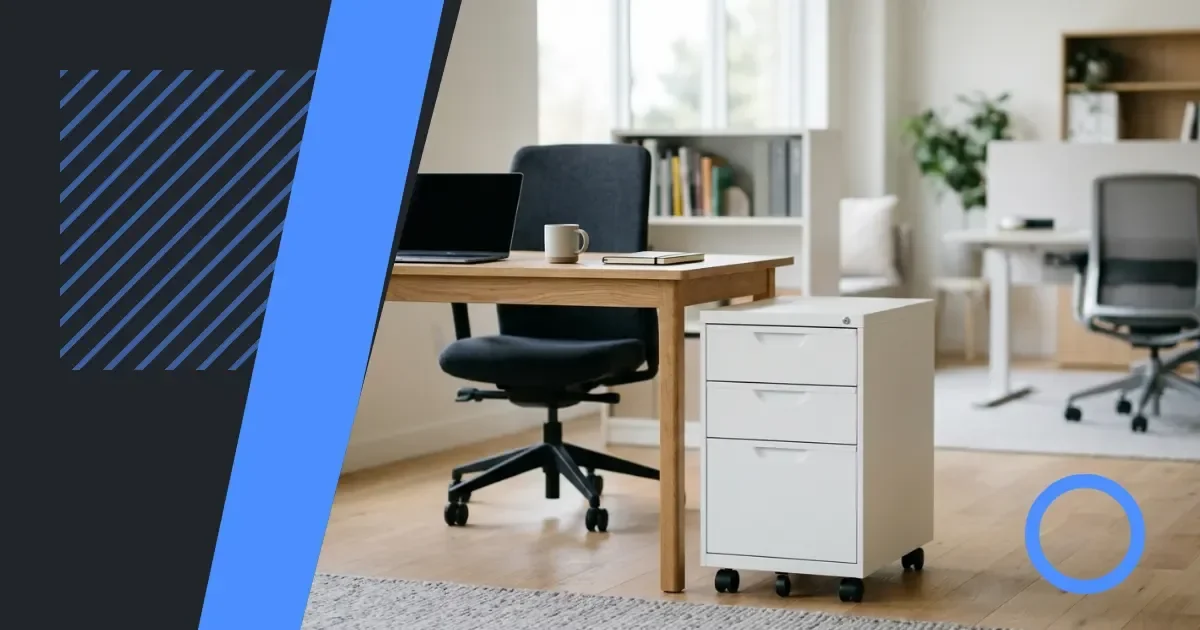
A mobile pedestal is a drawer unit on castors, designed to slide under a desk or move between workstations. It combines lockable storage with the freedom to reconfigure your workspace, though that mobility comes with trade-offs in weight capacity and steadiness. This guide sets out when a mobile unit serves you well, when a fixed drawer cabinet makes more sense, and what to check before you buy.
Core features of a mobile pedestal
Most units stand between 500 and 650 millimetres high, matching the clearance beneath a standard desk. Two or three drawers are typical: a shallow tray for stationery, a deeper file drawer accepting A4 suspension folders, sometimes a middle drawer for documents laid flat. A lock secures all drawers at once, controlled by a single key or combination.
Castors let you roll the unit away when you need floor space or wheel it to a meeting room. Brake mechanisms on two or four wheels hold the pedestal still while drawers are open. Steel construction dominates commercial ranges; laminate-faced chipboard appears in home-office models where weight and cost matter more than decades of daily use.
Drawer configurations compared
| Layout | Shallow drawer | File drawer | Middle drawer | Suited to |
|---|---|---|---|---|
| Two-drawer | One | One deep | None | Compact setups, minimal paperwork |
| Three-drawer slim | Two | One deep | None | Frequent access to small items |
| Three-drawer mixed | One | One deep | One medium | Mixed paper sizes, some loose documents |
Advantages in shared and flexible workspaces
Hot-desking relies on storage that follows the person. A mobile pedestal lets you claim any available surface, lock your belongings at the end of the shift and roll the unit into a locker bay or under a bank of desks. Deskstor has seen this arrangement replace rows of assigned cabinets in studios and co-working offices where floor plans change every quarter.
Temporary project teams benefit when equipment and files need to gather in one corner for a fortnight, then disperse. Wheeled units travel between rooms without dismantling fixings or asking facilities to move furniture. The same flexibility serves home offices doubling as guest rooms: the pedestal rolls into a cupboard when visitors arrive, returns to the desk in minutes.
Stability and weight-capacity limits
Castors raise the unit's centre of gravity. A fully loaded file drawer pulled to its stop can tip a light pedestal forward if the rear wheels lift. Steel frames with a deeper footprint resist tipping better than narrow laminate boxes, though even heavy-duty models warn against opening more than one drawer simultaneously.
Manufacturer ratings for drawer load range from eight to twenty-five kilograms per drawer. Suspension files, lever-arch binders and stacked reams approach the upper limit quickly. If you store technical manuals, sample books or archive boxes, check the stated capacity and compare it with a fixed cabinet, which spreads load across a wider base and anchors to the floor or wall where codes require it.
When a fixed unit makes more sense
- Drawers holding more than fifteen kilograms each, where tipping risk climbs
- Tall pedestals over 700 millimetres, which become top-heavy on castors
- Offices with thick carpet or uneven floors that catch small wheels
- Permanent workstations where you never move the unit and stability outweighs portability
Castor types and floor protection
Hard nylon wheels suit commercial carpet tiles and roll smoothly under load. Soft polyurethane or rubber treads protect wood, laminate and polished concrete from scratches and black marks, though they gather dust and fluff more quickly. Twin-wheel castors distribute weight better than single wheels and leave fainter tracks on short-pile carpet.
Brake pedals or friction locks hold the unit still. Test the mechanism with a loaded drawer: if the pedestal creeps forward when you pull the handle, the brakes lack grip or the wheels are too small for the surface. Some models replace rear castors with fixed glides, combining forward mobility with rearward stability; this compromise works when you only need to pull the unit out for cable access, not roll it across the room.
Lockability and key management
A single lock bars access to every drawer, operated by a tumbler key or a push-button combination. Replacement keys arrive slowly and cost more than the inconvenience suggests, so label spares and store one off-site. Combination locks remove the key-loss problem but add a step each time you open a drawer; they suit shared pedestals in schools and clinics where many people use the same unit over a term or a shift.
Check how the lock engages. Cheaper mechanisms secure only the top drawer, relying on internal slides to block the others; forcing the bottom drawer can snap plastic tabs. Better units drive a steel rod through all drawer fronts when locked, a design that resists leverage and spreads stress across the frame.
Choosing between mobile and built-in drawer options
Desk-integrated pedestals sit inside the frame or bolt to the leg, offering the same drawer volume without castors. You gain stability and a cleaner look beneath the worktop; you lose the ability to reconfigure or take storage with you. If your desk and tasks stay in one place for years, the fixed option removes the maintenance and brake-checking that wheeled units demand.
Wall-mounted rail systems and overhead cupboards put storage above the desk, freeing floor space and keeping frequently used items within arm's reach. Pedestals and wall storage are not exclusive: many offices pair a locked mobile unit for confidential papers with open shelving for reference books and equipment, separating security from convenience. For further context on pairing storage with desk type, see our guide to sit-stand desks and the working habits that benefit most.
Fitting a mobile pedestal to your working habits
- Measure the clearance beneath your desk, from floor to the underside of the worktop, and subtract twenty millimetres for castor compression and brake clearance.
- List what you need to store and estimate its weight; if suspension files or binders exceed twelve kilograms per drawer, prioritise steel construction and a wide footprint.
- Decide whether you will move the unit daily, weekly or never; frequent rolling justifies smooth-glide castors and a lighter frame, while a pedestal that stays put can trade mobility for load capacity.
- Test the lock and brakes with drawers loaded to working weight, checking for tipping, creep and ease of key operation.
- Confirm that castor material matches your floor type, protecting the surface without gathering debris that jams wheels.
Maintenance and longevity
Dust and hair wrap around castor axles, slowing rotation and leaving streaks. Turn the unit on its side every few months, pull debris from the wheels and wipe axles with a dry cloth. Lubricate brake pivots and lock cylinders once a year with a dry graphite spray; oil attracts grit and gums the mechanism over time.
Drawer runners wear faster on mobile units than on fixed cabinets because the entire frame flexes slightly when you roll it. Ball-bearing runners outlast simple plastic glides, though they cost more and add weight. If a drawer begins to stick, check that the pedestal sits level; a unit parked on a slope for months can warp the frame and bind the slides. Our article on finding the right desk height for your setup also covers how uneven floors affect furniture alignment.
Material and finish choices
Steel pedestals powder-coated in neutral tones last decades in commercial settings, resist dents and support heavier loads than laminate equivalents. Laminate-faced units cost less, weigh less and come in wood-effect finishes that match home-office desks, but chipboard cores swell if water reaches them and edges chip under repeated knocks.
Mesh or perforated drawer fronts ventilate contents and reduce weight, though they forfeit privacy. Solid fronts with recessed handles present a cleaner line and hide clutter, at the expense of a few extra kilograms. If appearance matters less than function, prioritise frame rigidity and drawer capacity over finish; a scarred steel unit that holds its load beats a pristine laminate box that tips when opened.
Download PDF: Mobile pedestal selection checklist PDF, 28 KB
Further reading
Frequently asked questions
What is the typical height of a mobile pedestal for under-desk use?
Most mobile pedestals stand between 500 and 650 millimetres high, designed to fit beneath a standard desk with clearance for castors and brake mechanisms. Measure from your floor to the underside of the worktop and subtract twenty millimetres to confirm fit.
How much weight can a single drawer in a mobile filing cabinet safely hold?
Manufacturer ratings range from eight to twenty-five kilograms per drawer, depending on construction. Steel frames with ball-bearing runners handle heavier loads than laminate units with plastic glides. Always check the stated capacity before loading suspension files, binders or archive boxes.
Do mobile pedestals with locking castors stay in place when you open drawers?
Brake mechanisms on two or four wheels hold the unit still, though effectiveness depends on floor type and load. Test with drawers at working weight; if the pedestal creeps forward despite locked wheels, the brakes lack grip or the unit is too light for its contents.